


Reading atmosphere - Press play, then forget the music is there
It’s midnight in Shinjuku.
While most people are coming back from work, a small restaurant is just starting up for the day.
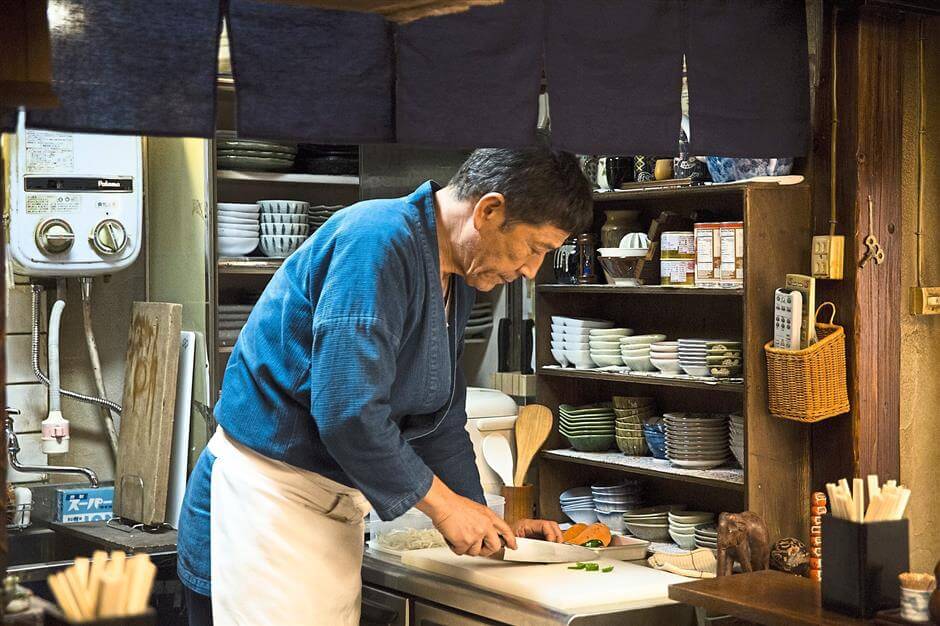
From the narrow street, you can smell the freshly made soba and hear people laughing, glasses jingling. Inside, the Master moves calmly behind the counter. He does not rush nor perform. He simply pays attention to every person, every word, and every emotion. He's always on the ball, and puts his heart into everything he does. To be honest, there is something almost radical watching someone work like that today.
The art of slow working.
I've been deeply influenced by the TV show Midnight Diner. It completely changed the way I look at work and life.
In a world that constantly reminds you to produce more, earn more, and work more, you slowly burn yourself out and lose focus on what truly matters.
In the entrepreneur circle, a lot of inspiring people on the internet tell you to build ten projects, launch fast, monetize everything, and move on if it does not work quickly. To some extent, they are not completely wrong. But rarely do they ask whether this pace is actually making your work better, or your life deeper.
The era of instant gratification.
The Rise
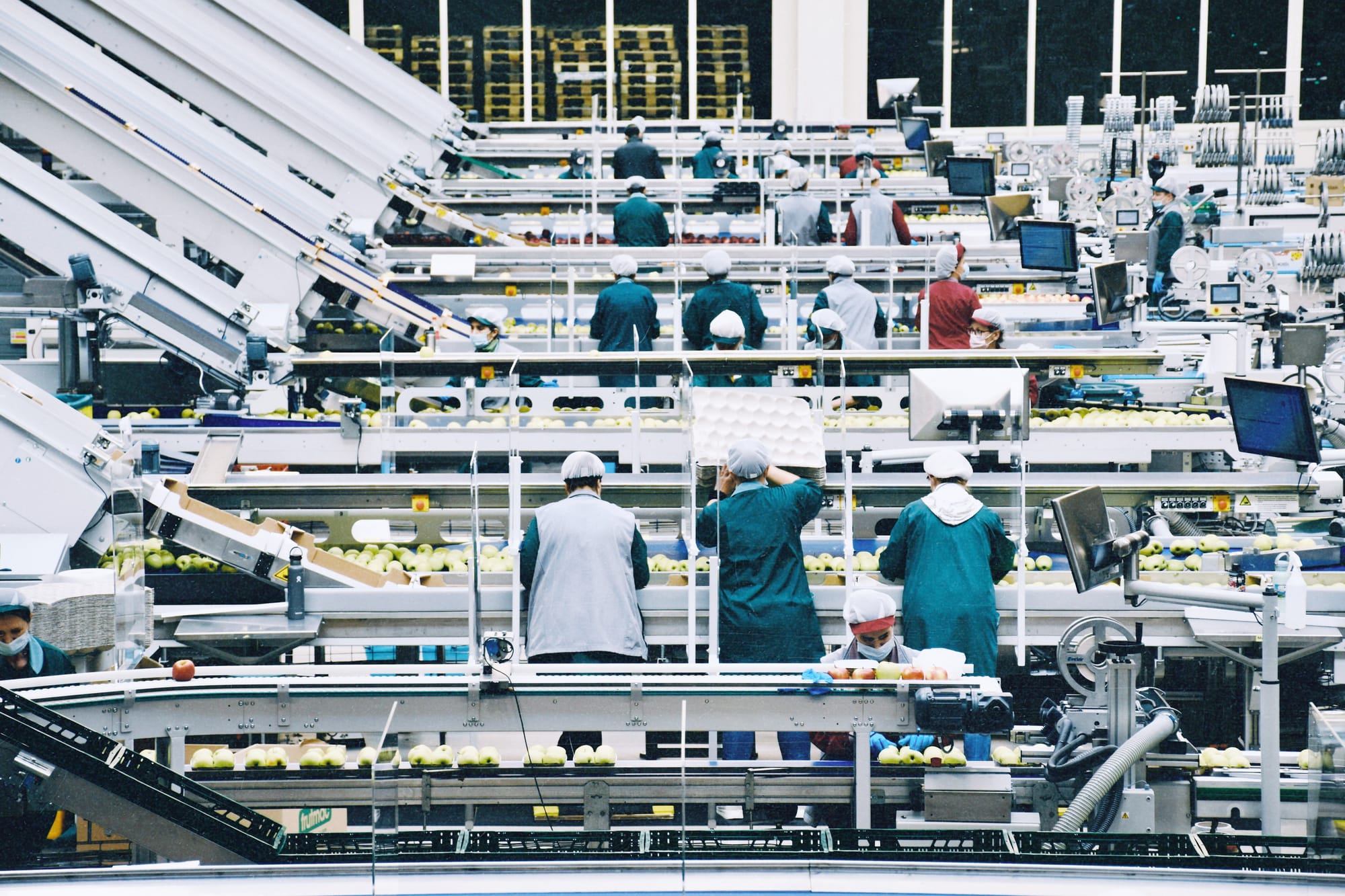
Back in the days, when most jobs involved working long hours in factories, companies were constantly expanding. Managers were looking for ways to optimize output, which was a reasonable approach.
Measurement helps improve systems.
In the early 20th century, the rise of Taylorism ushered in an era where everything was about measurement, optimization, and efficiency. Later on, we saw the emergence of KPIs, OKRs, dashboards, and countless growth metrics.
The problem started when this approach was carried over into other domains.
Creative and knowledge fields, such as writing, coding, photography, teaching, research, and other pursuits born out of curiosity, are now mostly judged by output, metrics, revenue, followers, and speed.
When our jobs are supposed to bring meaning to our lives, we slowly turn that meaning into our identity. To the point where, if you do not produce enough, or your efficiency does not live up to the metrics, everything starts to fall apart.
When a measure becomes a target, it stops being a good measure. — Goodhart's law
The Collapse
We all know the consequences of pushing the human body beyond its limits. Professional athletes who go through that kind of physical pressure are at least prepared for it, but they can still end up with lifelong injuries.
If we look at some extreme sports like boxing, it gives us some brutal examples of what happens when the body is pushed too far. For most of us, it is probably not a knockout punch that will change our lives for the worse. But burnout that follows a similar logic in a quieter way: repeated pressure, ignored warning signs, and consequences that arrive too late.
Across the European Union, nearly one in two workers (44%) report severe time pressure or work overload. Those are ones of the workplace conditions that can lead to burnout. And this number is almost the same worldwide.
The root cause of burnout is not always the work itself, but work that becomes endless and keeps pushing against our physical and mental limits. Today, we can achieve more and faster with AI agents. It's like a burst of dopamine every time, and people end up sharing their hospital journey online because of this crazy race.
I'm done with them fucking with us.
— Rob Hallam (@robj3d3) July 12, 2026
Ended up in hospital today from stress.
Stayed up all night pushing my limits too hard, thinking it would be removed.
Health comes first.
Do better @AnthropicAI https://t.co/l9nI6sw6Jq pic.twitter.com/D4CT1iwyRO
There is always another project, another feature, another opportunity, another task to complete. The finish line keeps moving further away. Moreover, we tend to believe that the best is yet to come if we just keep pushing through.
So it becomes easier and easier for work to consume us. But burnout is a trap. I hope we can all find the wisdom to step back before it catches up with us.
It doesn’t always look dramatic. Sometimes it looks like opening our computer and feeling nothing but emptiness. Sometimes it looks like having ten ideas but no energy to touch any of them. Sometimes it looks like being productive all day and still feeling like your work is useless and doesn’t serve a purpose. This has a name: “brown-out” (also known as quiet quitting). It happened to me before I quit my stable job to start my own company. You can have the best salary or position, but if you lose the taste and meaning behind the work, it’s over.
Toxic productivity does not only exhaust the body. It damages taste and makes us impatient. We stop enjoying the process and stop caring about the details. We want the result before the work has had time to mature.
The Slow Down
The ideas in slow productivity won’t help you do more, but they will help you achieve more, and be happier while doing it.
By acting with intention, even though each step may be longer, you can achieve your goal faster.
Nowadays, Japanese art attracts more and more people because it gives importance to things that modern productivity often ignores: silence, patience, gesture, material, imperfection, and time. A tea bowl, a garden, or a carefully prepared meal is not only beautiful because of the final result. It is beautiful because we can feel the attention behind it.
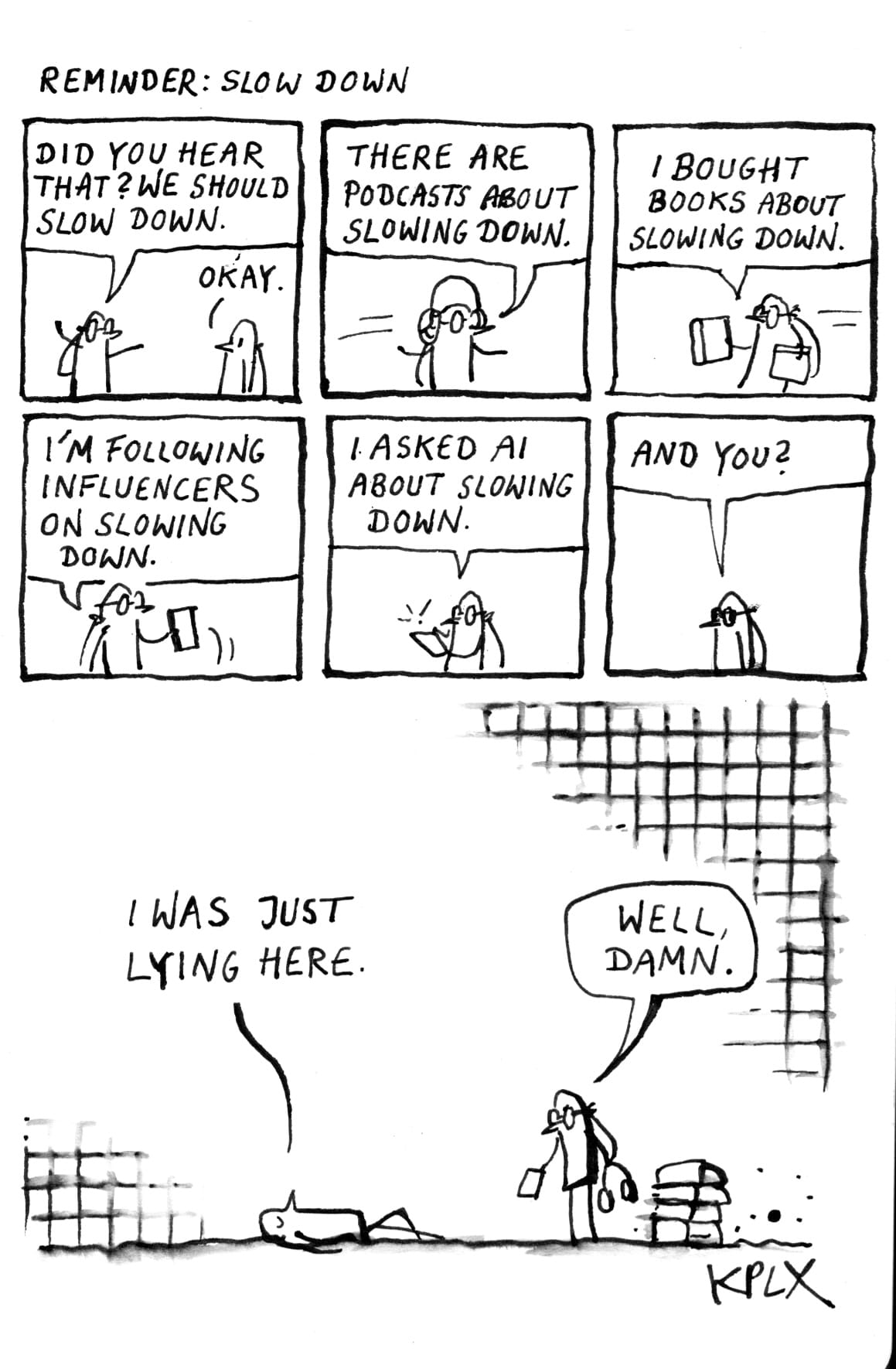
Slowing down does not mean becoming lazy, passive, or anti-ambition. It means being intentional. Slowing down is not doing less because we are afraid, it is doing less because we care more. It is also choosing what deserves our attention and refusing to feed every artificial urgency around us.
The Master is not lazy, he is attentive. He knows his space, his tools, his people. He takes his time, but he does not drift. That is the difference between slowness and carelessness, care shows up in the small decisions: cleaning a table, choosing quality products, finishing a task properly.
We can start slowing down by taking it easy, speed down on the road, embracing the unplanned, eating slower, journaling every morning. Ralph Simone clearly says that this new way of living changed his life and brings him more opportunities.
I personally find myself coming back to analog or low-tech devices: film cameras, vinyl, old phones. They are far from being efficient and it’s actually not the point, they create friction. They force me to wait, to listen, to pay attention, and to stop expecting every experience to reward me instantly.
I also know that slowing down is constraining myself to focus on what matters more, managing my time accordingly and avoiding procrastination because, like everyone, I only have 24h a day.
Slow is smooth and smooth is fast.
Discussion